Bulk Conveyor Belt Production Line Essentials for High-Volume Operations
2026-11-02
Running a high-volume conveyor belt operation isn't just about keeping machines moving—it's about squeezing every bit of uptime from a line that can't afford to stop. From raw rubber mixing to final vulcanization, each step in a bulk production setup hides potential bottlenecks that quietly eat into your output. At SFC, we've seen how the right equipment choices turn those hidden losses into steady, predictable throughput. In this post, we'll walk through the core essentials that separate a line that merely runs from one that genuinely performs under pressure.
Raw Material Handling That Keeps Lines Moving
Line stops rarely start at the machine. They begin at the dock, in a staging area, or wherever raw stock waits too long for a forklift. Keeping a line moving means matching material arrival to true consumption instead of treating unloading, inspection, staging, and feeding as separate jobs.
A few physical tweaks usually beat adding more labor. Gravity chutes from bulk silos to metering points eliminate lift-truck loops for resins or powders. For coils, rolls, or cartons, wheeled exchange carts and pre-loaded fixtures let an operator swap an empty position for a full one in under a minute.
Make stock levels obvious without asking anyone to watch them. Low-point sensors or simple weigh feedback can trigger a replenishment signal to the warehouse before the hopper runs dry. When raw material flows toward the point of use like water through a pipe, the line keeps its rhythm.
Precision Splicing Without the Bottlenecks
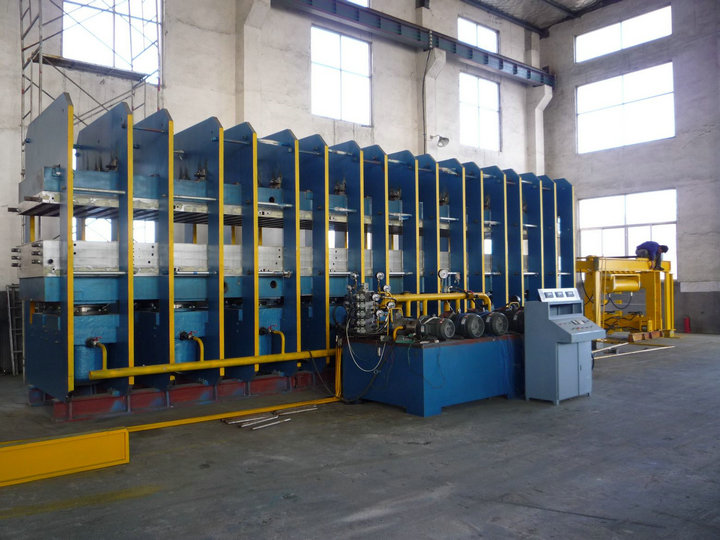
Traditional splicing workflows tend to stall at the same points: alignment checks, rework loops, and waiting on operator confirmation. The goal here is to strip those out without sacrificing the micron-level accuracy that the process depends on.
By tightening the feedback loop between measurement and fusion, each splice is validated the moment it forms. That removes the stop-start rhythm that usually creeps in with batch inspections. Instead of pausing after every few joints, the line keeps moving, and rejects are caught in real time rather than discovered downstream.
The practical effect shows up in cycle time, not in headline specs. Operators spend less time babysitting the equipment and more time on the few joints that actually need attention. That shift is what turns a precise but sluggish process into one that holds tolerance at full throughput.
Quality Checks That Catch Defects Early
A misplaced semicolon or an unchecked null value rarely announces itself in the moment—it waits until the code has shipped and someone is cursing at a blank screen. Early quality checks flip that narrative. They're the unglamorous, slightly paranoid routines built into the development pipeline: a linter that refuses to ignore unused variables, a unit test that runs before you even sip your coffee, a code review where a teammate asks why this function returns two different types. These checks don't prevent every failure, but they shrink the window between writing a defect and knowing it exists. That gap is where projects quietly bleed time.
Static analysis tools are the quiet heroes here. They don't execute your code; they read it like a skeptical editor, flagging patterns that have bitten countless teams before—resource leaks, race conditions, an exception swallowed with a bare except. And then there's the humble type checker. It won't write your logic for you, but it will tell you, before you even run a build, that you're trying to pass a string where an integer was promised. That's the whole point: catch the defect when fixing it costs five minutes, not five days.
Even with automation, human eyes still matter. A well-structured pull request review isn't just about finding bugs—it's about asking "what happens if this array is empty?" or "why are we using a regex here instead of a parser?" Those questions force the code to defend itself early. Pair programming, when done without ego, works the same way: two people watching the same screen, one typing, one thinking three steps ahead. The defect that might have shipped as a subtle memory leak becomes a two-line fix before the branch is even merged. Early checks don't guarantee perfection, but they make perfection less necessary.
Automation Tweaks for Round-the-Clock Output
Scheduling scripts isn't just about setting a cron job and forgetting it. The real difference comes from small adjustments—staggering workloads so resource-heavy tasks don't collide, adding retry logic that backs off instead of hammering a failing endpoint, and rotating credentials before they expire in the middle of a long run.
Quiet hours still leave room for maintenance. Build in automatic health checks that pause a pipeline when disk space dips below a threshold or when a dependent service starts returning odd latencies. These tweaks keep output flowing without waking someone up at 3 a.m.
Finally, treat logs as a first-class part of the automation. Instead of dumping raw stack traces, emit short, human-readable markers at key steps—"batch 14 done, 3 retries, next in 90s"—so a quick glance tells you if the system is breathing normally or about to stall.
Maintenance Routines That Prevent Downtime
Downtime rarely announces itself with a loud bang. More often it creeps in through neglected filters, loose cable connections, or a firmware version that has been quietly falling out of support. The most reliable way to keep systems online is to build small, repeatable checks into the daily or weekly rhythm. For example, a quick visual sweep of error lights and a log scan before the first cup of coffee can catch irregularities long before they turn into a midnight pager alert.
Scheduled lubrication, torque checks, and thermal imaging of electrical panels might sound old-fashioned, but they remain some of the strongest defenses against unexpected shutdowns. The key is to treat these tasks as non-negotiable calendar items rather than “when there is time” chores. Teams that stick to a simple checklist with clear ownership tend to spot worn belts, corroded contacts, or rising bearing temperatures early, while replacement parts are still on the shelf and not on a rush order.
Another layer that prevents downtime is documenting what normal looks like. When vibration levels, current draw, or operating temperatures are recorded over time, even slight deviations become visible. This turns maintenance from a reactive scramble into a predictable rhythm. It also means that when a new technician joins, they inherit a baseline of healthy operation instead of learning through trial and error during an outage.
Scaling Up: Layout Strategies for Maximum Throughput
When a facility hits its ceiling, the first instinct is often to add more machines or people. But throughput rarely improves by simply cramming extra resources into the same footprint. The real leverage lies in how workstations, inventory buffers, and transport paths are arranged. A layout built around dominant flow patterns—instead of departmental convenience—shortens travel distance for both materials and operators, which directly cuts cycle time.
One practical move is to map the highest-volume product families and give them a dedicated cellular layout. Group the equipment needed for each family into a tight U-shaped or L-shaped cell. This keeps work moving in one direction, reduces cross-traffic, and makes imbalances immediately visible. For lower-volume or custom items, a functional layout can still work, but it should be zoned so that those jobs never intersect the main artery.
Capacity calculations also need to account for aisle width, staging areas, and peak-hour congestion. Wide enough to let two loaded carts pass, aisles prevent blocking; dedicated input and output zones at each cell stop people from using the main corridor as temporary storage. Finally, design for the second shift. A layout that works at 70% utilization can fall apart at 95%, so leave room for extra containers, tool carts, and quick maintenance access without stealing space from the flow.
FAQ
The foundation is material flow. Before adding presses or extruders, map out how raw compound, fabric, and steel cord move through the plant. A line that feeds consistently at the front end prevents most starvation and overloading issues later.
Steel cord handles higher tension per millimeter and resists elongation better over long hauls. In bulk operations, that means fewer splices and less downtime, even though the initial investment is steeper.
Usually at the curing press, not the calendar or extruder. Press dwell time is fixed by compound chemistry, so the only real fix is adding more press capacity or switching to a continuous vulcanization process if volumes justify it.
Train crews to follow the same lay-up sequence and use a checklist that includes overlap length, cord alignment, and cleanliness of the bonding surfaces. Small deviations in splice work multiply quickly across hundreds of meters of belt.
Laser-based distance sensors on the take-up loop or load cells under key rollers give a real-time read. They let operators adjust drive parameters on the fly instead of waiting for a scheduled shutdown.
When belt surface temperature at the wind-up station stays above 40°C consistently. A staged cooling setup prevents internal stress from setting unevenly, which is a common hidden cause of premature tracking problems.
Letting compound viscosity drift outside the spec window during long runs. Even a 5% shift can change penetration into the carcass, creating weak spots that only show up after the belt is under load. Regular rheometer checks are cheaper than scrapping a full batch.
Conclusion
Running a bulk conveyor belt line at high volume starts with raw material handling that never lets the line starve. Feeder racks with pre-staged rolls and automatic tension control allow a fresh fabric or rubber ply to drop in without slowing the calender. Precision splicing becomes the quiet workhorse here: crews use pre-marked splice zones and heated presses that hold exact overlap length, cutting the usual 20-minute joint down to under eight. Quality checks shift from the final reel to the line itself. Array sensors and laser profilometers scan for ply separation, gauge drift, or edge waviness right after coating, so operators can mark and divert a bad section before it becomes a 300-meter scrap roll. That early catch changes the math entirely.
Automation works best when it removes guesswork rather than people. Auto-tensioners on let-off stands, synchronized drives on pull rolls, and closed-loop cooling keep belt dimensions stable through overnight runs. Maintenance is tied to cycle counts and thermal load, not just calendar dates; bearing temperature probes and edge trimmer wear sensors trigger small, planned swaps instead of a line-wide teardown. When output needs to climb, layout matters as much as machine speed. Parallel splicing bays, dedicated rewind aisles, and a serpentine flow path let two or three widths run simultaneously without forklift cross-traffic. The real gain comes from tightening every handoff so material never sits still and a defect never travels more than a few meters.
Contact Us
Contact Person: Chen Zhengwei
Email: [email protected]
Tel/WhatsApp: +86-13963975727
Website: https://www.sfcrubbermachine.com